What would you do with two months away from everything you’d spent a lifetime building? For Dr. Meredith Calvert, a neuroscientist with a career centred on understanding the brain, the answer was to fly to a Caribbean island, strap on a scuba tank, and start replanting coral reefs. She came back with a different idea of what she wanted her life to look like.
Spending 25 years building expertise in one field tends to give you a clear sense of what your career looks like. You know the milestones worth chasing and the shape of a good day’s work. But outside the lab, Meredith had built a second life around yoga and diving, and when a long-service sabbatical came up in 2024, she took the chance to explore those passions on a deeper level.
This is the story of how two months in Honduras changed everything that came after.
A scientist with a second life
Meredith’s professional life had long revolved around scientific research. For two and a half decades she specialised in cell biology and neurobiology, using advanced microscopy and image analysis to better understand how cells behave in the brain.
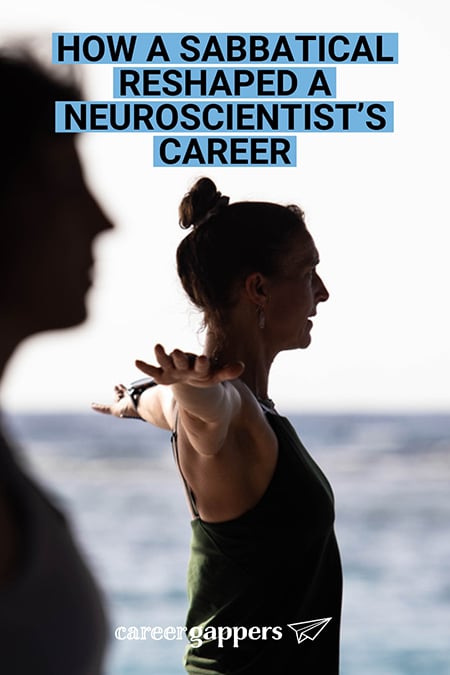
Alongside her demanding scientific career, she sought to build mindful pursuits into her lifestyle.
“While working on my PhD, I discovered yoga as a way to handle the stress and intensity of graduate school,” she explains. “Around that time I also became certified in scuba diving. Both yoga and diving have been major passions for me ever since and provide balance in my life when the work gets heavy.”
When the opportunity for a sabbatical emerged through her employer, it opened a door to bring all of these worlds together. The next challenge was finding the right location.
“I was looking for somewhere where I could combine my passions: biological imaging, conservation, yoga and diving,” she says. “This was a pretty specific combination!”
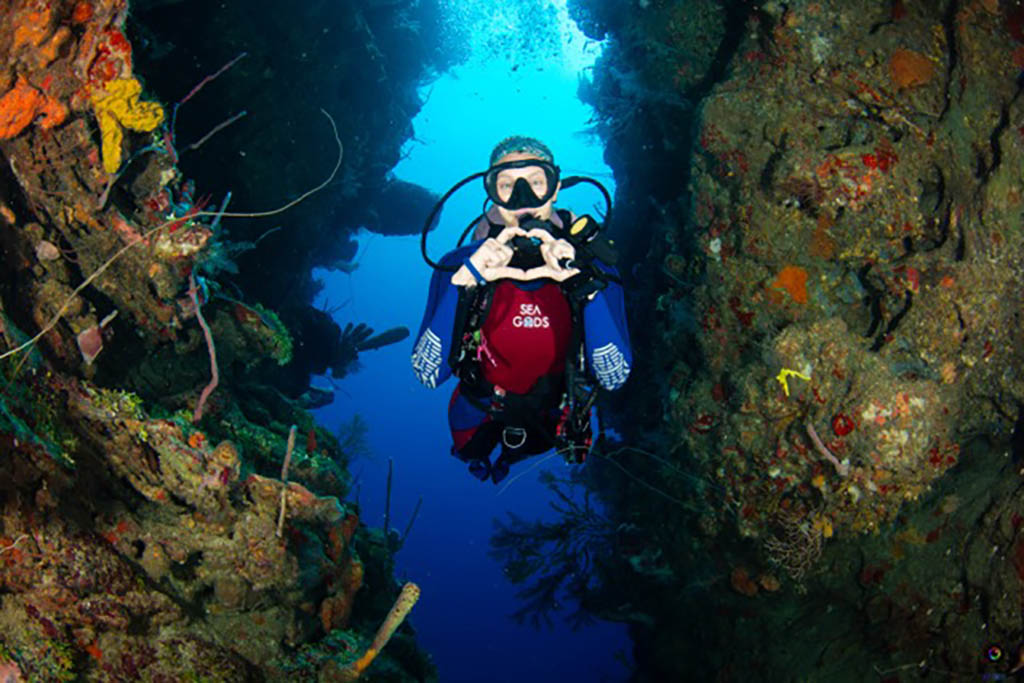
Meredith had previously visited the Honduran island of Roatán in the Caribbean Sea, and already felt connected to its dive culture. She had also completed a coral conservation diving certification in Curaçao several years earlier, where she was introduced to the reef restoration work taking place in Honduras.
“As soon as the idea of putting these specific things together, I knew that Roatán was the right fit.”
Life beneath the surface
Meredith split her sabbatical into two connected experiences. Part of her time was spent working with Bay Islands Reef Restoration, helping support coral restoration efforts in the Mesoamerican Barrier Reef system, the second-largest coral reef in the world. The other part was dedicated to hosting a yoga and scuba retreat built around mindfulness, breathwork and underwater confidence.
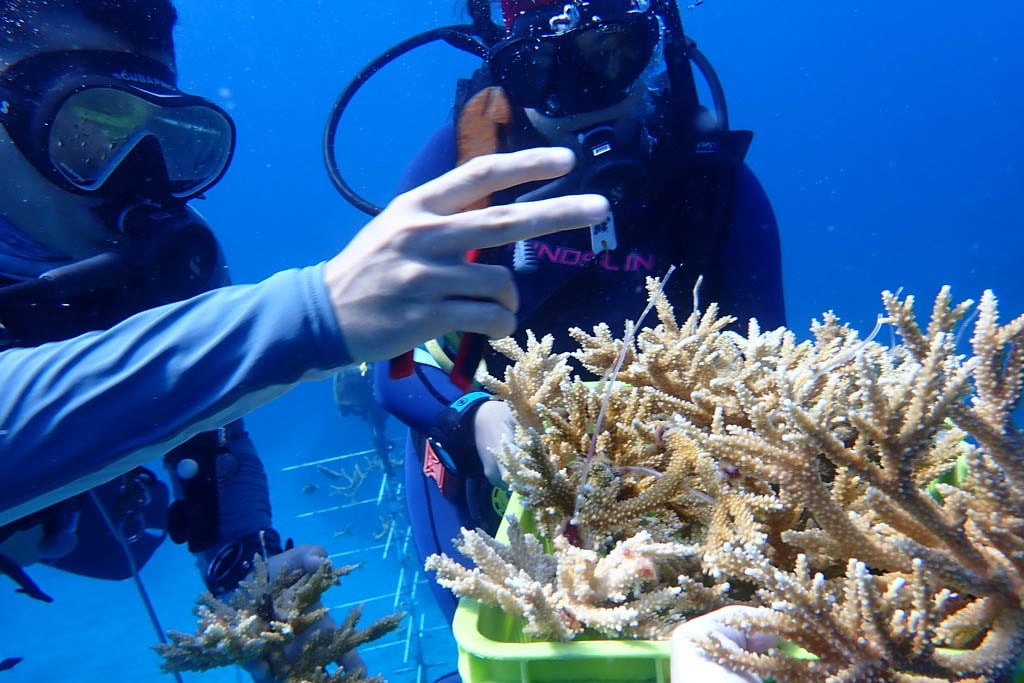
The conservation work was practical and hands-on. Meredith worked alongside the reef restoration team maintaining underwater coral nurseries, monitoring coral health and helping transplant mature coral back onto damaged reef systems, all while the organisation was tracking how coral species were responding to the worst global bleaching event on record.
“Restoration is incredibly important, but it’s not a substitute for tackling climate change, which remains the root cause of reef decline,” she says.
Her scientific background proved to be unexpectedly useful too. When she noticed the team manually outlining hundreds of underwater photographs to measure coral growth rates, she recognised the process from her lab work.
“As a neuroimaging scientist, I saw a faster approach and was able to write a small piece of code using AI-supported segmentation that could automatically identify and measure coral from hundreds of images at once, saving the lab many hours of tedious manual work,” she explains.
“It was a moment where these two very different pieces of my life overlapped beautifully and allowed me to make an impactful contribution.”
Yoga, diving, and slowing down on a sabbatical
Alongside the conservation work, Meredith also hosted her own retreat experience through SeaCalm, combining yoga, meditation and scuba diving on a small private cay off the coast of Roatán. It was an idea that grew naturally from her own experiences underwater.
“I’ve long found that yoga and diving both put me into the same state: calm, embodied, and completely present,” she says.
Years earlier, Meredith had struggled with anxiety while learning to dive herself – a common experience among new divers – but she found a way to manage it by applying yogic breathing techniques.
“Diving has the reputation as a thrill-seeking sport, but to me it was always about serenity and flow,” she says. “I wanted to share that experience with other nervous new or returning divers and make this incredible underwater world accessible to those struggling with the same challenges.”
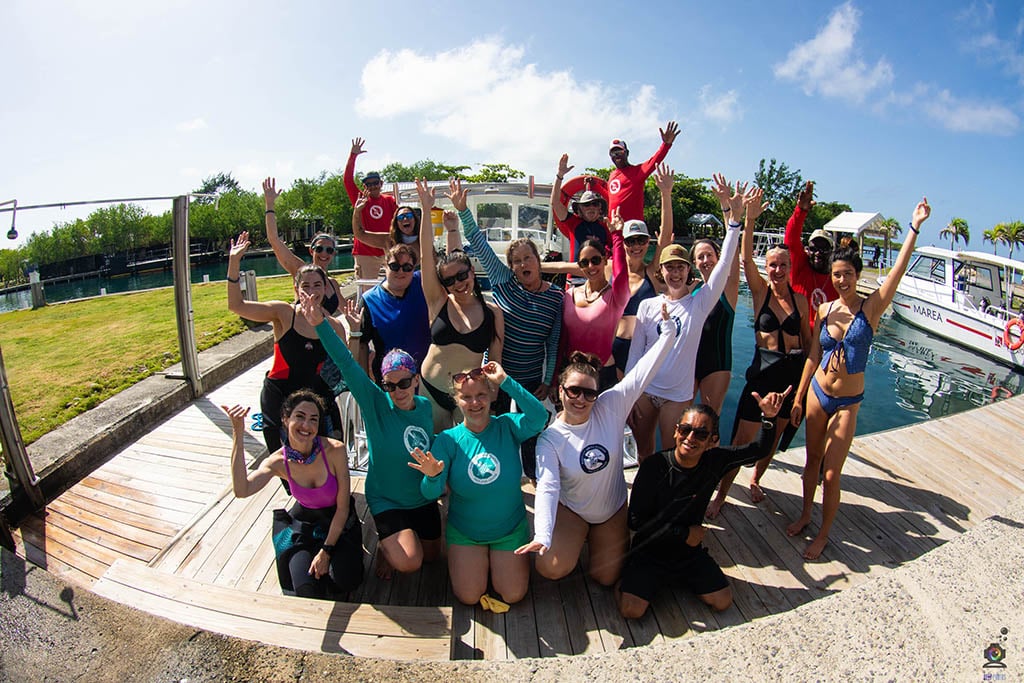
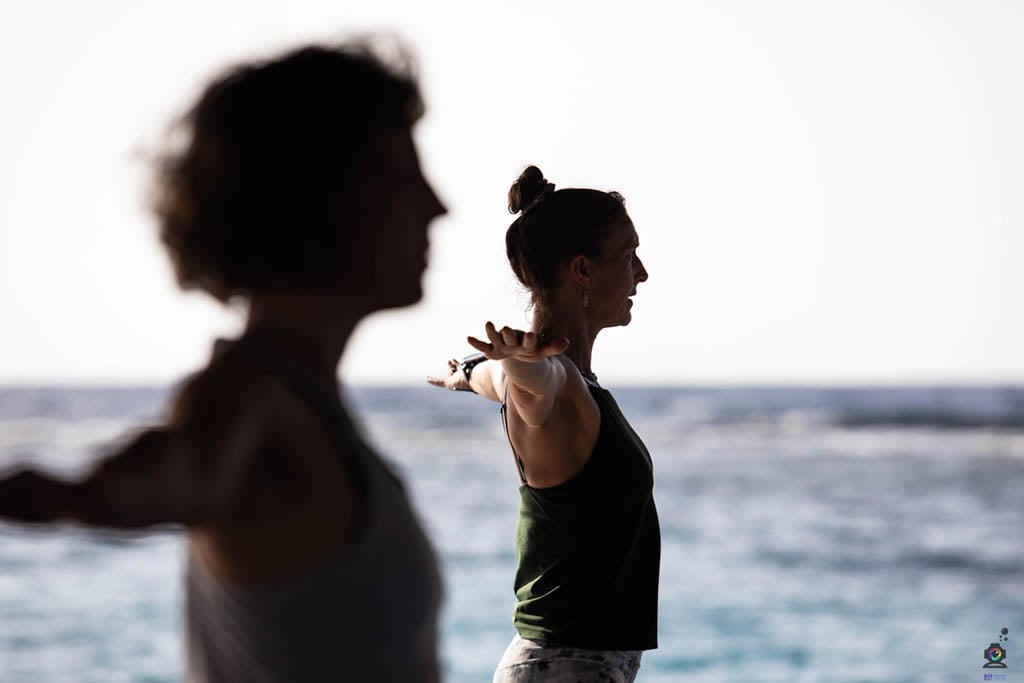
The rhythm of retreat life became intentionally slow and grounding for Meredith. Mornings began with sunrise meditation and yoga over the water before guests headed out to dive already feeling calm and present.
But balancing all of these roles at once was not always straightforward.
“The biggest challenge was the mental gear-shifting required,” Meredith explains. “As a scientist working with the reef restoration team, I was a student again, in observation mode and following someone else’s protocols. As a retreat host, I was responsible for creating a nurturing and transformative experience for other people.”
“And somewhere in between, I was a person on my own journey, trying to absorb what I was learning, seeing and feeling.”
After the sabbatical: a new sense of purpose
Like many travel sabbaticals, the experience gave Meredith something deeper than simply a break from work and some hard-earned rest.
“I returned to work feeling genuinely refreshed and energised,” she says, “but more than that I returned with clarity around what I wanted for my next chapter.”
The contrast between her professional work inside a laboratory and the close-up nature of what she experienced in Roatán was hard to shake.
“The sabbatical showed me what it felt like to spend my days doing things that had immediate impact, whether helping to restore a dying reef or watching someone find both calm and awe underwater for the first time,” she says.
“That’s so different from what I’d been doing in biomedical research, where the impact is real but very removed from the daily work itself.”
Meredith decided to shift away from her full-time lab role, and moved her scientific work into consulting, while expanding her retreat and teaching work instead.
“What were once my full-time career and my side hustle have essentially swapped places,” she says. “And that feels much more in tune with where I want to be right now.”
The change also brought greater freedom and a shift in priorities. “Having two school-aged daughters also makes this flexibility so valuable,” she says. “I wanted more time with them, and now I have it. I’m incredibly grateful for that.”
Different measures of success in life
“I think the sabbatical made the hypothetical possible,” Meredith explains. “It’s one thing to imagine building a life around teaching and curating retreats, but another to actually do it and see people respond so positively.”
Since returning, Meredith has expanded her retreats and launched a podcast, Calm with Me: Science, Stories, and the Practice of Meeting the Wild, exploring the intersection of neuroscience, mindfulness, fear, nature and awe.
“I wanted to weave together stories from the outdoors, neuroscience, and the philosophy of yoga and mindfulness in a way that lets listeners imaginatively move through challenge and fear into awe and fascination,” she says.
It is rooted in the same idea that shaped Meredith’s sabbatical: helping people reconnect with the natural world in a direct and personal way.
“When you’re up close with the beauty and fragility of the coral reef, present and breathing, you don’t need to be convinced that it matters,” she explains. “The urgency of the climate crisis stops being an abstraction and becomes something you feel in your body.”
For Meredith, the benefits of this new direction have become far more personal than the traditional markers of career success that once defined her professional life.
“The most rewarding feedback I receive is when someone tells me something shifted or healed for them,” she says. “That sense of accomplishment means more to me now than anything I ever got from a published paper.”
“A fantastic low-risk way to find out”
Looking back, Meredith sees the sabbatical not as an escape from work, but as a turning point that allowed her to visualise what she wanted from life at a deeper level.
“I never would have known that I had a gift for this, or that it would bring me so much joy, without having the chance to try it first,” she says. “The sabbatical gave me the space to experiment with myself and my passions in life, which I hadn’t really done since graduate school.”
For anyone considering a similar step, Meredith believes a sabbatical can create space to explore possibilities that are difficult to understand while remaining inside the routines of everyday life.
“If you’ve been wondering whether a different kind of life or career might suit you better, a sabbatical is a fantastic low-risk way to find out,” she says. “You’re temporarily giving yourself permission to run an experiment and discover what you learn from it.”
And perhaps most of all, taking a step back from your regular work patterns can sharpen your sense of the preciousness of time.
“Ultimately, the sabbatical taught me that how we spend our time and how we treat the planet are not separate questions,” she says. “They both come down to paying attention to what matters before it’s gone.”
You can listen to Meredith’s podcast, Calm with Me: Science, Stories, and the Practice of Meeting the Wild, on Apple Podcasts and Spotify.
Read more inspiring stories in our sabbatical series, or start planning your own time-out with our complete guide to taking a travel career break.