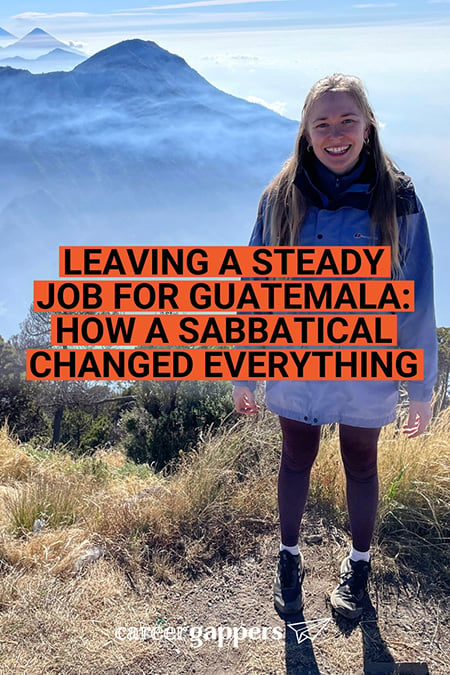
If you have a stable job with good work–life balance perks on a career path that aligns with your academic background, conventional wisdom says you should hold onto it. Jenny Scott Russell did the opposite. Finding herself drawn to a project thousands of miles away in Guatemala, she left her secure London-based role in the luxury interiors industry and took a step into the unfamiliar.
Jenny didn’t leave without first trying to build a bridge back. But when her request for a sabbatical was turned down, the prospect of working alongside a women’s textiles cooperative in Central America had grown too strong to ignore. She handed in her notice and went.
This decision led to a two-and-a-half month journey of immersion, travel and reflection. As it turned out, the bridges were not burnt; she was able to return to her old job afterwards anyway.
It is a pattern that has come up again and again across the sabbatical stories we have shared; the feared consequences rarely materialise. But every story is different, and Jenny’s is a tale of what can happen when you step out of a structure you have always known.
A chaotic work environment in London
Jenny’s route into the interiors world followed a natural path. She had studied textiles at university, started out as a PA to a managing director at a textile design company, and eventually worked her way into product development and production at a luxury interiors brand.
It was a strong fit on paper, but relentless in practice. “The work was fast-paced and often stressful, with short deadlines and last-minute requests being the norm,” she explains. “I’m someone who thrives on organisation, so working in such a reactive environment didn’t always suit me, but it was just how the brand operated.”
The company did make some efforts on work–life balance and introduced a four-day week, something Jenny valued, but a compressed schedule brought its own pressure. “This is why I thought they might be open to me taking a sabbatical,” she recalls. Unfortunately, it didn’t work out that way.
“Having job security would have been ideal, especially renting in London where there’s always that financial pressure. But by that point, I’d been planning the trip for so long that it started to feel like a now-or-never decision.”
Guatemala calling
Jenny had used Workaway while backpacking in New Zealand and was already comfortable with the idea of project-based travel. When she began searching specifically for textile-related opportunities, she came across Trama Textiles, a women-led indigenous cooperative in Guatemala dedicated to keeping Mayan craft traditions alive.
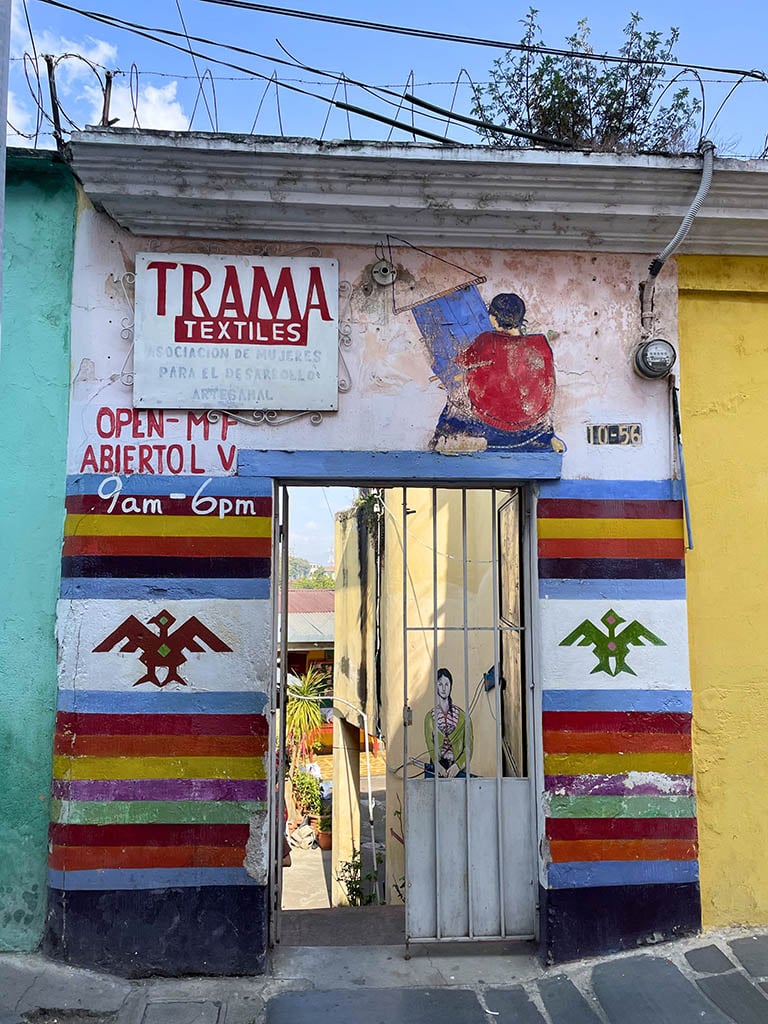
She began supporting them remotely from the UK, which enabled her to build a connection with the people involved and get a sense of the culture before travelling in person.
“I’d never been to Central America, and having specialised in weaving at university, I was immediately drawn to the project,” she says.
“Their focus on preserving indigenous weaving techniques really resonated with me, and I knew it would be an opportunity to learn firsthand from incredibly skilled craftspeople, while also stepping away from the hectic work culture I was used to.”
Ready for something different
The original plan was for a fairly short placement with the cooperative, but that changed as the remote relationship developed. “After speaking with the coordinator, it became clear that a short visit wouldn’t allow me to fully experience the project or the culture,” Jenny recalls.
And beyond the logistics of the placement itself, there was something more personal pushing her towards a longer commitment. “Having spent so much time locked down in London during Covid, I felt a real pull to get out of the city and immerse myself somewhere new.”
“So, if I was going to go all that way, I wanted to do it properly.”
Fortunately, she was able to sublet her room in a flat share, with her landlord proving to be more flexible than her workplace. This eased the pressure on the logistics of the move.
“I was determined to go, job or no job.”
Life lessons from Quetzaltenango
Jenny based herself in Quetzaltenango, a city in the western highlands of Guatemala, where she volunteered with Trama five days a week. Her role centred on their product catalogue, transferring it onto Canva and sharpening the English translations.
Mornings were typically spent working, lunches were taken with the local team, and afternoons opened up opportunities for yoga, hiking and exploring.
She lived in a house with other volunteers and fell into the rhythm of a place that operated at a very different pace to the one she had left behind.
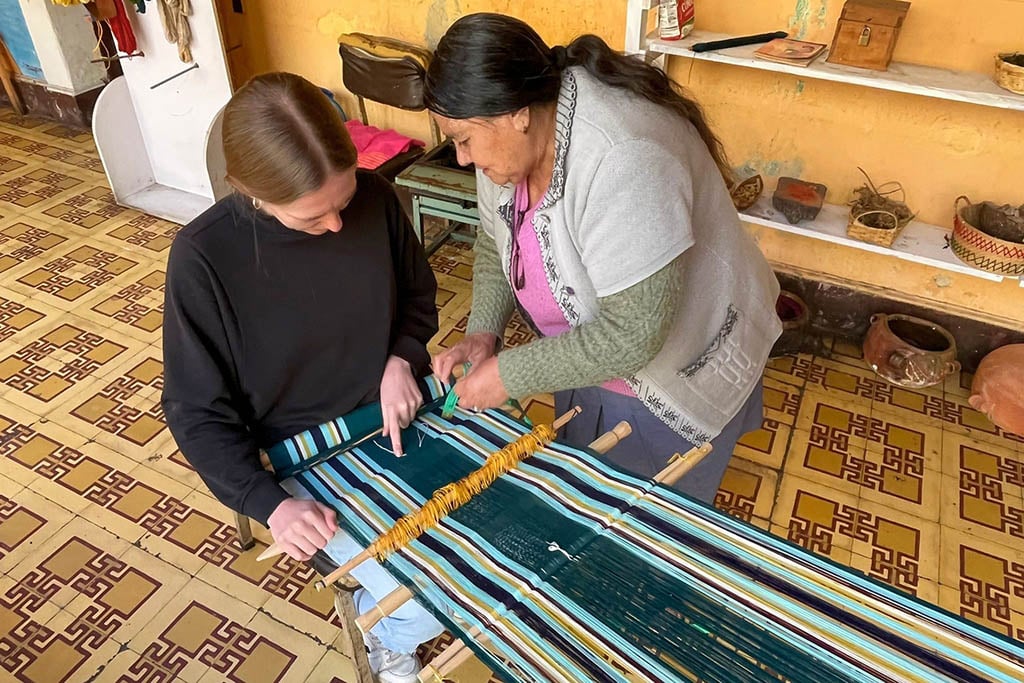
“Guatemala is such a special place to be based rather than just pass through,” she says. “I really immersed myself in day-to-day life there. Over the course of the trip, I made great friendships, experienced new cultures, learned traditional Mayan weaving techniques, and even became fairly confident speaking basic Spanish.”
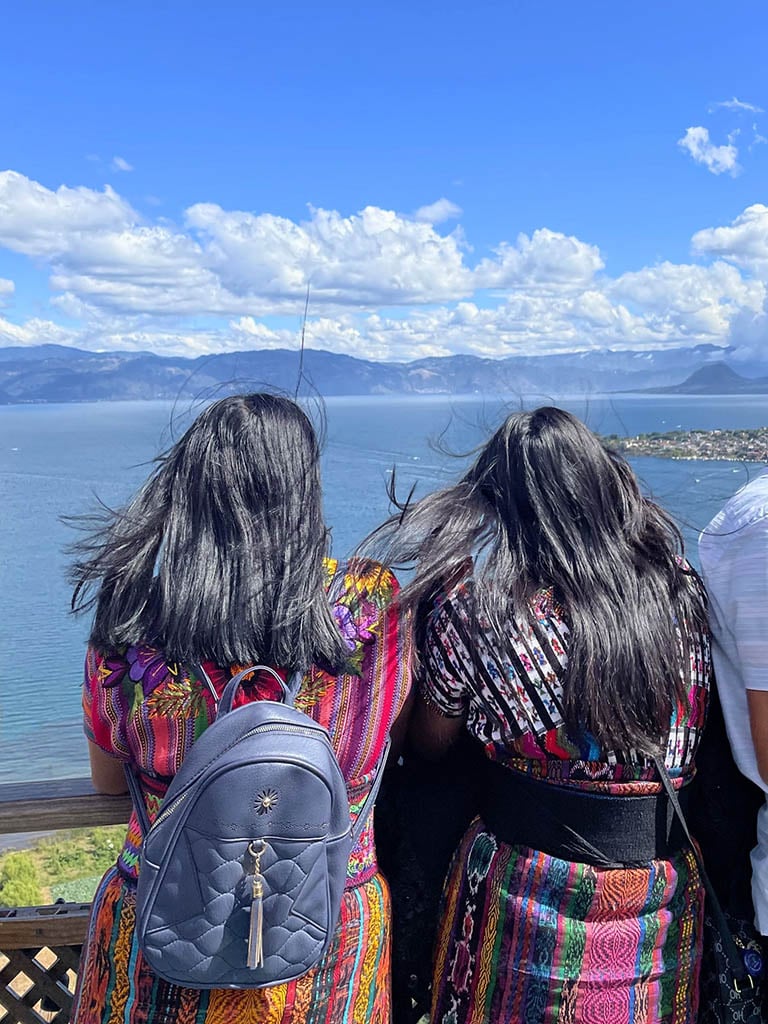
Two experiences stood out. The first was the expat community she encountered in the city, people who had built entire lives in Guatemala, working remotely or running their own businesses.
“What really struck me was how relaxed everyone was,” she explains. “It made me realise how intense life in London had become, and how much I’d normalised that constant pressure without really questioning it.”
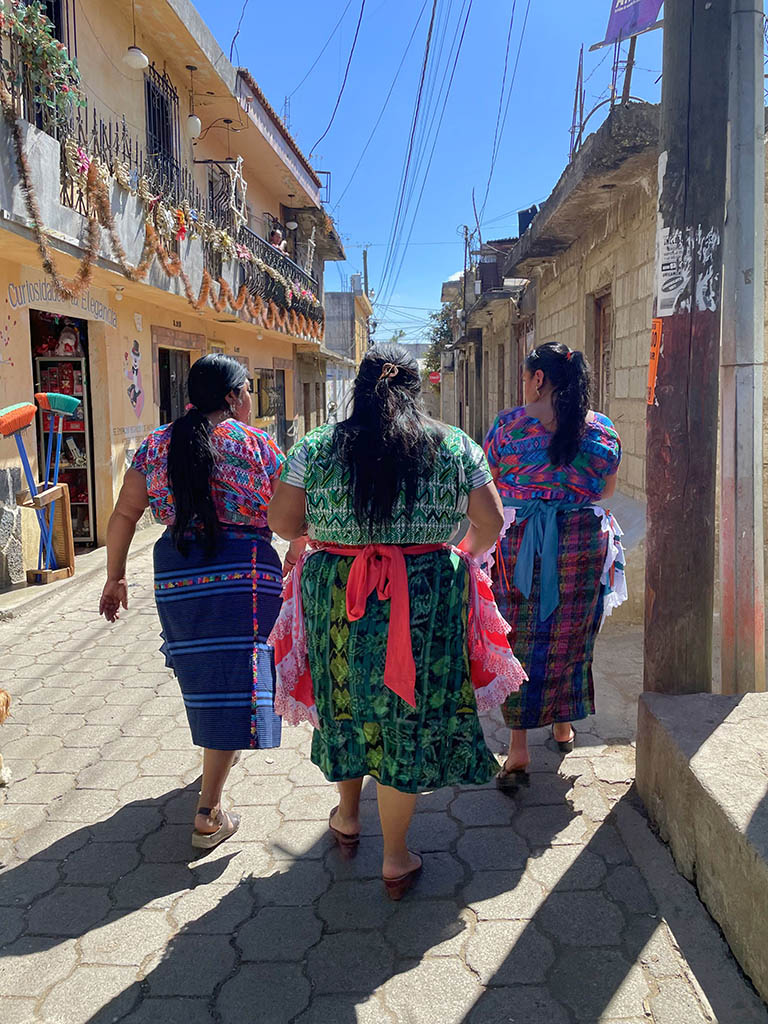
The second was visiting communities Trama works with directly and seeing what the cooperative means to the women involved, for their livelihoods and their heritage. “Meeting these women firsthand was incredibly grounding. It reminded me how much value there is in slower, more connected ways of living, and how easy it is to lose sight of that when you’re caught up in the pace of everyday life.”
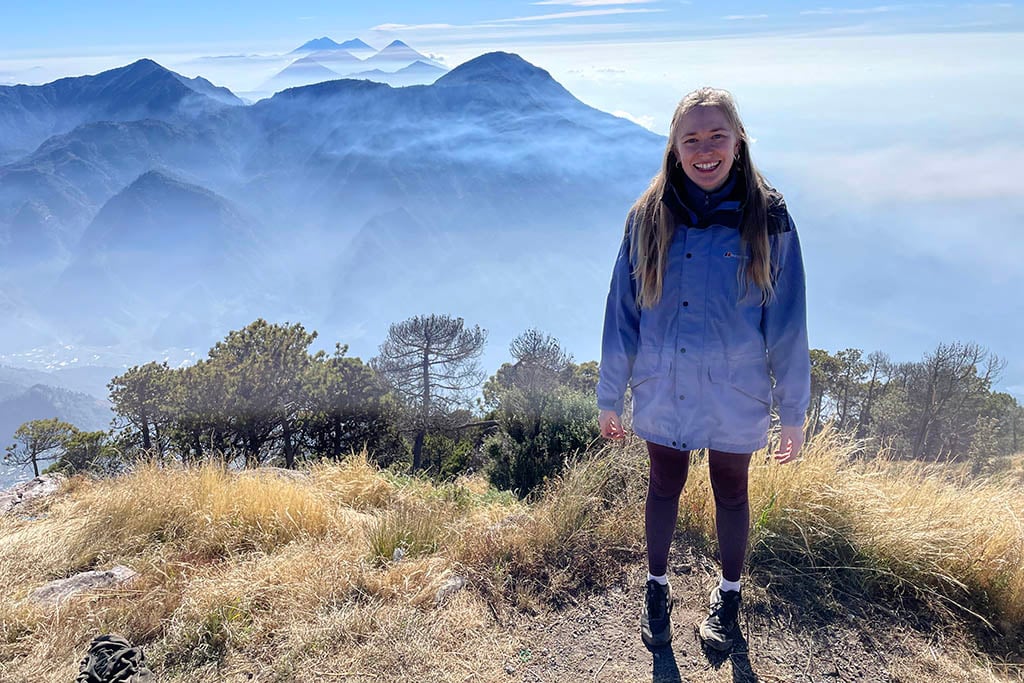
After two months in Guatemala, Jenny spent her final three weeks backpacking through Chiapas and the Yucatán in Mexico with a friend who flew out to join her from England.
“Ultimately, the experience made me realise that my career shouldn’t be the most important thing in my life,” she says.
Navigating the uncertainty of returning home
Travel career breaks can be shadowed by some stress if you don’t have a job to return to afterwards as part of a sabbatical arrangement. And so, as the trip wound down, Jenny’s attention naturally shifted to what came next.
She had given herself a one-month financial buffer for when she returned, but as that window approached, the uncertainty began to feel real. Rather than wait, she began applying for jobs and interviewing remotely while still abroad.
“I realised starting the interview process early would help ease some of that uncertainty,” she says, and though it cost her an hour or two a week in prep time, the momentum made it easier to enjoy everything else.
There was an unexpected upside too. “Interviewing from Guatemala and Mexico also became a great talking point at the start of conversations.”
She was actually offered a role by one of the companies she interviewed with while still in Central America, but didn’t take it. Instead, a former colleague who knew roughly when she’d be returning helped connect the timing with a project her old employer needed support on.
And so, Jenny was able to return to her old job after all, first on a freelance basis, then full-time once the project wrapped up. “I even managed to negotiate a pay rise,” she says.
“I couldn’t have been happier. In a way, it felt like I’d ended up getting the sabbatical I’d asked for all along, just unofficially.”
“Taking the risk ultimately strengthened my career”
Jenny returned from the trip with a new-found confidence, an aspect of personal development that is incredibly common among people who take travel sabbaticals.
“I have no doubt that taking the risk ultimately strengthened my career,” she says. “More than anything, it gave me a huge amount of confidence in myself and what I was capable of. Before the trip, I probably wouldn’t have felt confident enough to negotiate a pay rise, but afterwards I had a much stronger sense of my own value.”
She has since moved into a rewarding new role at an interior design studio, which she balances with running London Localite, a blog dedicated to sharing the realities of London living and local experiences in the city.
For anyone sitting with a similar pull towards something beyond their comfort zone, Jenny’s advice is pragmatic. “Save more money than you think you’ll need,” she says. “Having a financial buffer makes such a difference and can take away a lot of the anxiety around stability.
“If a sabbatical feels like the right option, there’s no harm in asking. But ultimately, I’d say you just have to go for it. That trip or opportunity you’re unsure about will be what you look back on fondly in old age.
“Taking a career break won’t derail your future. If anything, it can give you the space to reflect on what you actually want and come back with more clarity, confidence and perspective. That’s certainly how it played out for me.”
For more tips on navigating the practicalities of life after a sabbatical, see our survival guide to returning home after a travel career break.
You can also read more stories in our travel sabbatical series.
Love this? Pin it for later!