Straddling the border of north-east Argentina and south-west Brazil, Iguassu Falls is one of the world’s most spectacular natural phenomena. The world’s largest waterfall system, it is taller than Niagara Falls, twice as wide, and many say several magnitudes more beautiful.
Before our visit, we overheard many a discussion in bus stations and hostel bars across South America about which side of the falls is better to visit. Argentina or Brazil?
Many people only choose to do one or the other. We decided to take the extra day to do both, spending a night on each side of the border, and so here I have compiled some musings on the pros and cons of each falls experience, as well as some tips on getting around.
This site contains links to travel services we recommend, from which we may make commission at no extra cost to you.
Best tips for visiting Iguassu Falls
Helpful links:
✈️ Skyscanner: search for the best rates to travel the long distances between cities quickly
🚌 Busbud: for searching out travel routes and locating the cheapest tickets and best timing
🛡️ SafetyWing travel insurance: for peace of mind when travelling
Activities to book ahead:
🏞️ Puerto Iguazu – Argentinian Iguazu Falls with ticket: get a hotel pick-up and ride to the falls in a van for comfort and ease; avoid ticket lines and enjoy a guided tour of three areas of the park and viewpoints
🏞️ Foz do Iguaçu – Brazilian Iguassu Falls with ticket: hotel pick-up and ride to the falls in a van for comfort and ease; avoid ticket lines and enjoy a guided tour
⛪ Foz do Iguaçu – Wanda Mines and San Ignacio Ruins day trip: enjoy a day tour to explore UNESCO protect ruins of a Jesuit mission and gem-studded mines in the nearby area
🛥️ From Foz do Iguaçu – sunset catamaran tour with meal: relax on a luxury catamaran river ride at sunset, complete with dinner and viewing local landmarks
Accommodation:
Argentinian side of the falls in Puerto Iguazu
🛏️ Budget ➞ Nomads Hostel: comfortable stay in clean quiet dorms or private rooms, centrally located, friendly environment
🍳 Midrange ➞ Santa Marta: small family-run hotel with super-clean and comfortable rooms and a swimming pool; free coffee, tea and mate all day
🏨 Upscale ➞ Rincon Escondido B&B: spacious modern rooms with ensuites, friendly hosts, great breakfast included, nice grounds and swimming pool
Brazilian side of the falls in Foz do Iguaçu
🛏️ Budget ➞ Tetris Container Hostel: creatively designed container dorms based on the Tetris Nintendo theme
🍳 Mid-range ➞ Smart Iguassu Hotel: clean and comfortable single, double and triple rooms with great beds, wonderful staff, central location and expansive breakfast included
🏨 Upscale ➞ Hotel Rafain Centro: stylish property with elegantly furnished rooms, outdoor swimming pool & bar area, fitness room, game room, excellent breakfast included
Iguassu Falls comparison: Argentina vs Brazil
Argentina side: the immersive experience
We began our Iguassu visit on the Argentina side of the border, arriving at the small tourist city of Puerto Iguazu after a long overnight bus from Buenos Aires.

There is not a great deal to do around the city other than visit the falls. With our one spare afternoon, we chose to visit the Jardin de los Picaflores (“garden of the hummingbirds”), which was well worth the USD $5 entry fee to see a colourful variety of the tiny birds up-close.
We stayed in Nomads Hostel, situated conveniently a couple of blocks from the bus station. It had a semi-tropical feel, with jungle gardens and a swimming pool, and was equipped with a decent kitchen. Most importantly for us, it was well secured, with large lockers for our valuables and friendly 24-hour staff on the front entrance. (Back in Buenos Aires we met a couple who had their phones stolen as they slept in the night in a different Puerto Iguazu hostel, and so security was at the top of the hostel requirements list for our visit.)
Now for the falls. We were advised that we needed a full day for the Argentina side, so we got up fresh and early to set off at 7am. The night before, we prepared a pack-up of lunch and trekking snacks, as food is expensive inside Iguazu National Park.
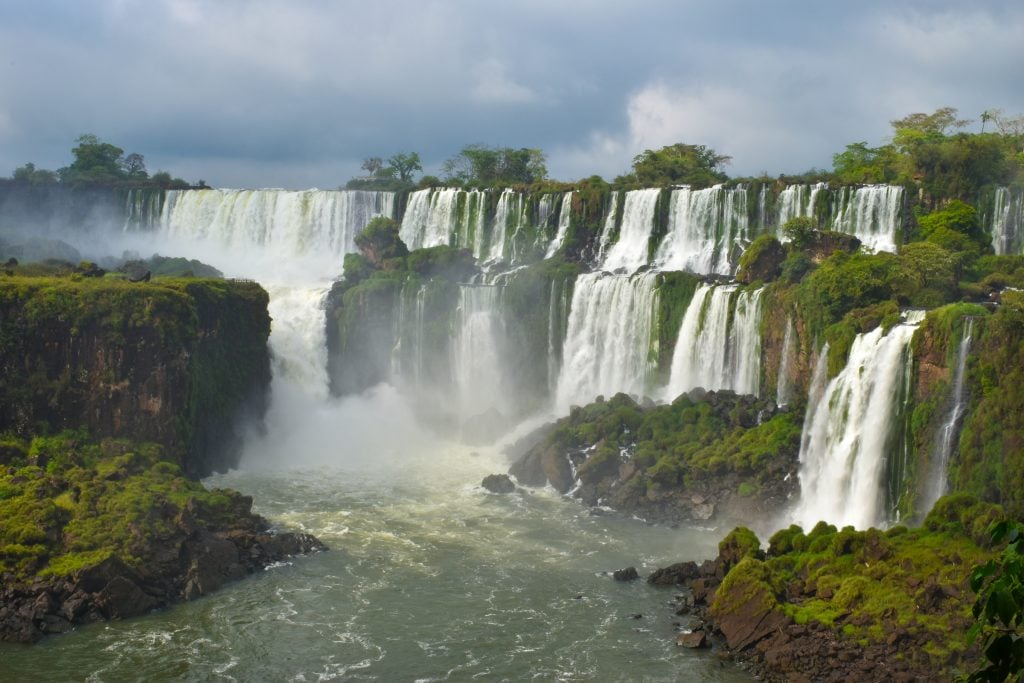
The journey to the falls was easy: we took a bus from the main station to the park, which, in 2026, costs cost around USD $11, one way..
At the park, the entry fee per person in 2026 is around USD $32 (up from around USD $30 when we visited), which included access to all of the main trails, as well as the train ride to the top of the Garganta del Diablo (“devil’s throat”). For an extra $60 each (plan for about $64.50 in 2026) we had the option to take a boat ride that goes underneath the falls – we opted for just the walking trails.
Prices have risen since our visit, and in Argentina in particular there have been issues with the currency exchange rate. Going self-organised on the day will save a bit of money but it can save time and hassle to book an Argentina Iguassu Falls experience with entrance ticket in advance,.
Arriving early to avoid crowds
We arrived ahead of the main wave of tourists, and so our walk along the lower trail was nice and peaceful, and we had plenty of time to stop and take photos uninterrupted. Sometimes it’s possible to take a free boat over to San Martin Island for a close-up view directly in front of the falls, but unfortunately for us the water levels were too high for it to operate during our visit.
A unique characteristic of the Argentina side is the build-up of anticipation as you edge closer to the falls and hear the roar of water growing louder before it emerges into view. Along the trail you also pass several other smaller waterfalls and wind through the jungle terrain, meeting anteaters, monkeys and other wildlife along the way.
The lower trail is about 2.5 kilometres of gentle walking that emerges gradually to a beautiful view of the eastern side of the falls from below, with several viewing spots giving different perspectives.
The upper trail is a bit shorter, but naturally involves a little more elevation walking (but not too strenuous). This trail takes you up to the top of the falls at the eastern end, giving a fantastic view across them in profile.
Devil’s Throat: the best and worst of Iguassu Falls
The final act was the train up to the devil’s throat, and this was where we found both the best and worst elements of the Argentina side of the falls.

At just before midday, the volume of people was stifling. The narrow boardwalk from the train disembarking point to the viewing area was crammed with tourist traffic, and so we did a lot of stop-starting and squeezing through as people posed for their obligatory selfies.
The scenery waiting at the end of the walk, however, was mesmerising. From the platform nestling at the peak of the devil’s throat, we looked down on the 82-metre-high, 150-metre-wide U-shaped cauldron as the endless torrents of water tumbled into an oblivion of white foam at the bottom. This is Iguassu Falls at its most intimate, although you’re still jostling for position at the packed lookout deck.
We were all done and ready to head back to the town by 1pm, so the full day advised wasn’t really necessary (although we hadn’t done the boat trip or mini jungle trek on offer). On the plus side, this gave us plenty of time to make the border crossing over to Brazil to get ready for the second leg of the trip.
Brazil side: the picture-perfect view
The city of Foz do Iguacu is the main urban centre on the Brazilian side of the border, and with a population density more than three times larger than Puerto Iguazu, there is more choice when it comes to local activities and places to eat and drink.

With a single overnighter before our Brazil-side falls visit, though, we didn’t get much chance to sample the city. The highlight was our stay at Tetris Container Hostel, a unique place to crash with a charming originality.
The entire hostel is custom-built in the theme of the famous Nintendo game, with dorms set inside large colourful containers correlating with one another. Even the ladders on the sizeable bunk beds resemble the famous Tetris blocks, and with the hostel bar offering a free caipirinha cocktail every night, what else could you need?
Getting our timings wrong
For visiting the Brazil side of the falls we had been told that half a day would be sufficient, so this time we took our time getting up and out. Once again this proved a mistake…
We caught the 120 bus from opposite to the hostel directly to the park. At 10am, though, we found ourselves caught up in peak tourism transit, and spent 45 minutes clinging to bus rails barely able to move.

At the park entrance we found a gigantic queue to buy tickets, but soon noticed that it was possible to get them from self-service machines over to the side. Not many others seem to have realised this, and so we were able to save some time. The entrance fee is around USD $32 each in 2026.
As with the Argentina side, prices have risen a bit since, and it’s also possible to book a tour to the Brazilian side of Iguassu Falls with entrance ticket, which includes a pick up in Foz do Iguaçu and pre-paid tickets so you can skip the queues, making it an easier trip if you’d rather avoid making all the arrangements yourself.
Ready with our tickets, we faced a further half-hour queue to get on a bus up to the falls. Unlike the Argentina side it was not possible to get to the falls by foot, and so there was no option but to take the bus.
Crowded but spectacular
After disembarking from the bus, we followed the designated path that wound down and across the western bank of the river, offering up spectacular views of the entire spectrum of the falls from directly opposite. While it lacked the intimacy of the Argentina side, the visual perspective felt more satisfying.
The problem though (again) was the sheer volume of people herding through the trail. I suspect this was a result of our timing, and that if we’d come a couple of hours earlier the experience would have been much more comfortable. In particular, it took an excruciating amount of shuffling to walk the short distance out to the viewing platform at the foot of the Devil’s Throat, and when we made it to the platform it was practically a bloodbath to get to the front for a clear view and photos.
Grumbling aside, it really was worth it for a breathtaking view of this colossal beast of nature that few have the fortune to experience.
In summary, if you’re looking for a great photo for Instagram, then the Brazil side is your best bet, but if you would prefer to get right in amongst the falls, look down from the brink or get drenched at the bottom, then head to the Argentina side. And whichever option you choose, be prepared to wade through some heavy tourist traffic.
What is the best time to visit Iguassu Falls?
This is a tricky question, as the meaning of “best” is quite subjective! It all depends on what you’re looking for in your experience.
December to March is the rainy “high” season for Iguassu Falls. With the drama of peak water flow, the colossal falls are at their finest and most exciting during these months, and you won’t be the only one thinking about that little piece of information!
Be prepared to squish, squeeze, and elbow your way through the press of crowds competing for a clear view of those photo-op scenes. Along with other international visitors, a vast number of Brazilian and Argentinian tourists will be enjoying their summer vacations at the falls.
Increased rainfall at this time of year will bring super-hot and humid conditions, but will also provide those transcendental misty views of the falls that everyone craves. You’ll also have a greater opportunity to catch some of the magical rainbows produced by all that water, if the weather complies.
To avoid the crowd spikes of the busiest times, consider visiting Iguassu Falls in the dry season of April-October. The crowds will be far less and the temperatures will be milder. However, with less rain, the magical quality of the falls may be diminished a bit in this season from it’s rainy season splendour – it just depends on Mother Nature!
From our experience, I’d definitely suggest planning your trip around the shoulder season, between April-May or September-October, if only for the breathing room among the crowds. The falls will still have powerful water levels in these months (and you’ll probably still be able to catch a gorgeous rainbow!) but the temps will be much more bearable.
The park will also be dryer, making walking the trails easier, less chance of trail closures due to high water levels, (it happens sometimes in the rainy season!) and you’ll get less drenched on the boat ride, too.
Worth a visit near Iguassu Falls: the Itaipu hydropower project
Some 30 kilometres north of Iguassu Falls, stretching across the Brazil–Paraguay border on the Paraná River, is the Itaipu hydropower plant.

Itaipu, with an installed capacity of 14,000 megawatts, was the world’s largest power station when it was built, and boasts some impressive statistics. Supplying around 75% of Paraguay’s energy needs and 15% of Brazil’s, the maximum water flow through the project’s spillways is equivalent to forty times the average flow through Iguassu Falls.
The amount of iron and steel used in the construction of the dam could build 380 Eiffel Towers, while the concrete used would be enough to build 210 football stadiums the size of the Maracanã.
The project’s significance to bilateral relations between the two countries runs deeper than the statistics. Cooperation over its development played a key role in advancing positive relations against a backdrop of historical conflict.
I happen to have worked in hydropower for four years before my travels, and so I couldn’t miss the opportunity to see this feat of engineering. If you can spare half a day while visiting the area, I would highly recommend it.
Similar to the falls, for Itaipu there are two visiting options either side of a border. You can pay for a guided tour on the Brazil side of the border, or take a free bus tour on the Paraguay side. We opted to go with the latter, in part because it neatly coincided with a trip to Ciudad Del Este, the shopping city in Paraguay just over the border from Foz do Iguazu.
There are also options to book organised tours to Itaipu from both Puerto Iguazu and Foz do Iguacu:
- Itaupu Dam tour with entrance ticket from Puerto Iguazu (Argentina)
- Itaupu Dam tour with entrance ticket from Foz do Iguacu (Brazil)
Other activities while you’re in the area
As mentioned earlier in this article, there is really not much else to do in the small town of Puerto Iguazu, other than a visit to the charming Jardin de los Picaflores. Foz do Iguaçu, being much larger, is more lively. Here are a few activities to book ahead if you’d like to stay longer in the region and soak up more culture and nature.
If you’re into old mines and historical ruins, a Wanda Mines and San Ignacio Ruins day trip will take you afield to explore the fascinating ruins of a UNESCO-listed San Ignacio Jesuit mission and tour the gem-studded walls of the Wanda mines. You can depart for the tour from either Foz do Iguaçu or Puerto Iguazu.
In contrast to the dynamism of Iguassu Falls, you can also enjoy a delicious dinner on a luxury catamaran while peacefully cruising the Iguaçu and Paraná rivers. This delightful sunset catamaran tour with meal, takes off from Foz do Iguaçu.
Experienced guides will provide tidbits of info about Brazil, Argentina, and Paraguay, the three countries that share borders in this area, as you pass by local monuments and points of interest. Relax and enjoy a delicious buffet meal with drinks and there is also the opportunity for an optional swim in a jetty with a private swimming pool for cruise guests.
And finally, if you love getting great deals and are ready for some city action, a private shopping tour in Ciudad del Este, Paraguay, home to over 3,500 stores, is a fun way to spend a day. The shopping district, packed with everything from electronics to clothing to housewares to handicrafts, can be daunting on your own. With a savvy local guide as your personal shopper, you’ll be sure to get fair prices and quality merchandise.
Accommodation
In addition to the two hostels that we visited (mentioned and linked above), there are many other guest houses, B&Bs, and hotels in both Puerto Iguazu and Foz do Iguaçu for all budgets. Here are some ideas:
Puerto Iguazu, Argentina
Mid-range: If you want more privacy than a hostel provides, Santa Marta is a small family-run hotel that has comfortable clean rooms, great personal service, a nice swimming pool, and offers free coffee, tea and mate all day.
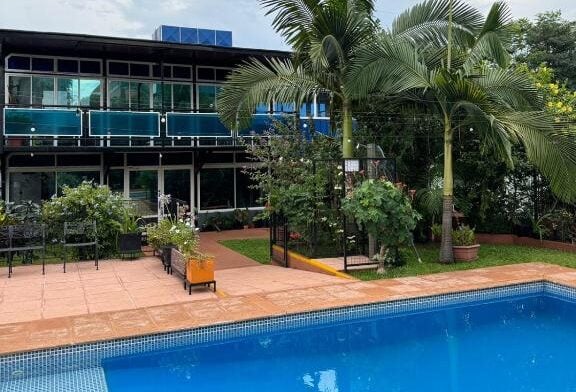
Upscale: You can splurge a little and enjoy Rincon Escondido B&B with spacious, modern rooms with ensuites and service-friendly hosts. There’s a great breakfst included and a wonderful swimming pool for cooling off… an overall quiet oasis to hang out and relax.
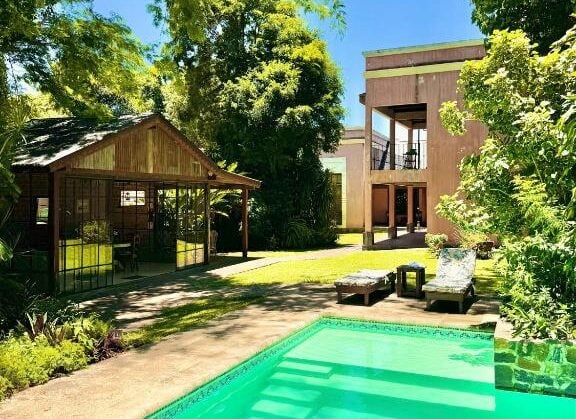
Foz do Iguaçu, Brazil
Mid-range: Smart Iguassu Hotel is a super clean and comfortable little hotel offering single, double, and triple rooms with great beds. The staff is wonderful, and the central location and expansive breakfast included are two additional bonuses!
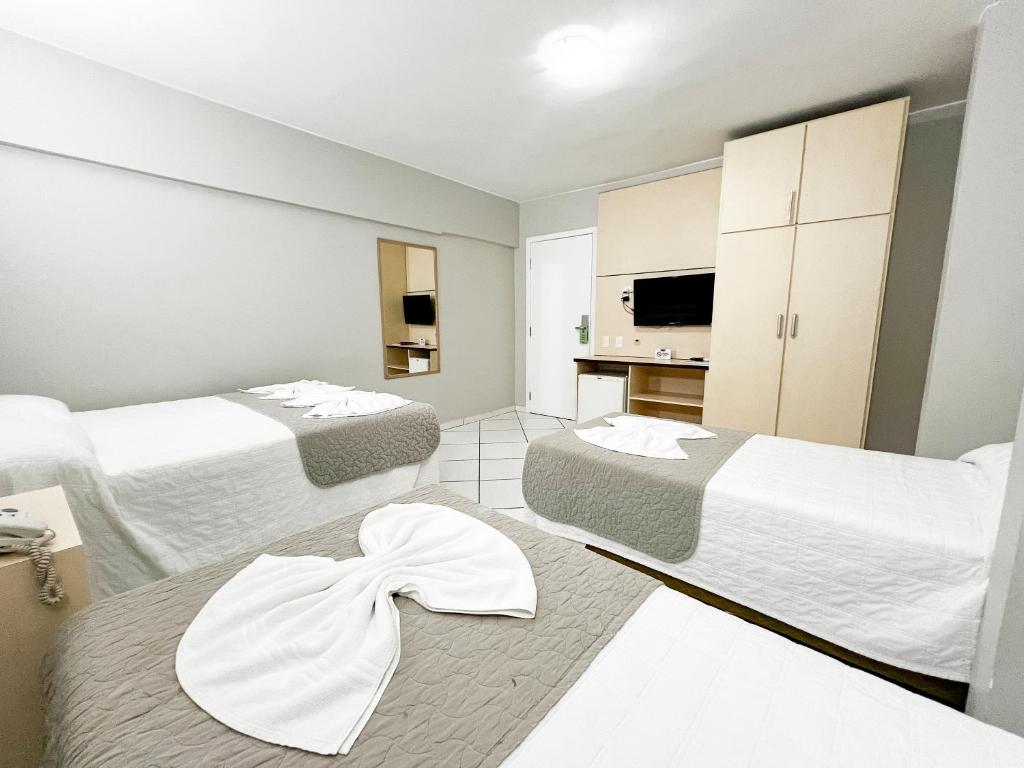
Upscale: A stylish property with elegantly furnished rooms, Hotel Rafain Centro is a popular choice for its overall decor, plus the outdoor swimming pool & bar area offers a break from the outside world. There’s also a gym/fitness room and a game room, and the excellent included breakfast is a daily highlight.
What you need to know about getting across the borders
My final piece of advice on navigating Iguassu Falls and the area concerns getting between the international borders. The process can be a hassle and I wish I’d known the following information before we went through it.
Buses run fairly regularly (once every hour-ish) between Puerto Iguazu and Foz do Iguazu, but they do not stop at the border and wait for you to have your passport stamped (so DO NOT leave your bags on the bus at the immigration office – if you do, you might not see them again).
This meant that we ended up taking over three hours to make the six-mile journey from one city to the other; a bus to the border, another bus an hour later to Brazil customs, and then a third bus another hour later into Foz do Iguazu. From what I’ve heard, the process is the same coming the other way. The last buses of the day are at around 7pm, so make sure you leave yourself plenty of time to have your stamps done.
If you want to avoid the waiting around, you can take a taxi all the way through and stop for your stamps, but you will of course have to pay a premium.
The border between Brazil and Paraguay is not as cumbersome, but can also be time-consuming. The official crossing is at Friendship Bridge, with a Brazilian migration office on the east side and Paraguayan on the west. It’s an honesty policy of sorts to have your passport stamped when crossing the bridge, and it would be quite easy to just walk through without bothering, but we felt it best to do everything by the book.
The area around the bridge – particularly on the Paraguay side – does have a notorious reputation for crime, so be vigilant. Ciudad Del Este is known to be a hub for trafficking stolen goods, and plenty of petty theft and pickpocketing goes on, with tourists an obvious target as always. There is a heavy police presence near the bridge, so don’t stray too far from there with your valuables. We didn’t want to take any chances, and so we took a taxi from the bridge to our hostel.
Stay safe folks, and enjoy the falls.
Are you stopping by at any South American cities on your way to Iguassu Falls? Check out some of our guides:
Love this? Pin it for later!