An African safari is a bucket-list experience for many. There are few things more breathtaking than watching adorable lion cubs wrestle with one another playfully or admiring a cheetah slink elegantly through the plains, muscles rippling beneath its beautiful spotted coat.
However, safaris have a reputation for being expensive. The good news is a safari doesn’t have to break the bank, and with a little bit of careful planning it’s possible to go on a budget-friendly safari adventure.
I’ve visited over 12 African countries, many numerous times, and been on hundreds of game drives. I’ve learnt many tips and tricks along the way on how to plan a safari to suit all budgets.
In this article I’ll dive into everything you need to know about planning the perfect safari for your budget during your travel career break.
How much does an African safari cost?
When it comes to safari costs, there’s a huge price range, from $180 per person per day all the way in excess of $7,000 per person per day!
There are a number of factors which have an impact on your safari cost, from the country that you select to go on safari in, whether you opt for a private or shared safari, your level of accommodation and even your method of booking.
At the lower end of the cost bracket is a shared camping safari in East Africa (Tanzania, Kenya or Uganda) or a self-drive safari in South Africa or Namibia.
Shared group safaris can be extremely cost-effective, especially if you are a solo traveller. They are also a great way to meet like-minded travellers. However, they lack the flexibility of a private safari, coming with fixed itineraries and no flexibility with accommodation.
Self-driving safaris on the other hand give you the ultimate freedom and flexibility. But with so much freedom comes a lot of responsibility, and it’s advisable to have off-road driving experience and a basic knowledge of vehicle maintenance. On a self-driving safari in Namibia, I broke down in the middle of the desert and was completely at a loss on what to do. Fortunately a pair of mechanics rocked up and were able to help me and show me how the cable to the car’s battery had come loose while driving on the uneven roads.
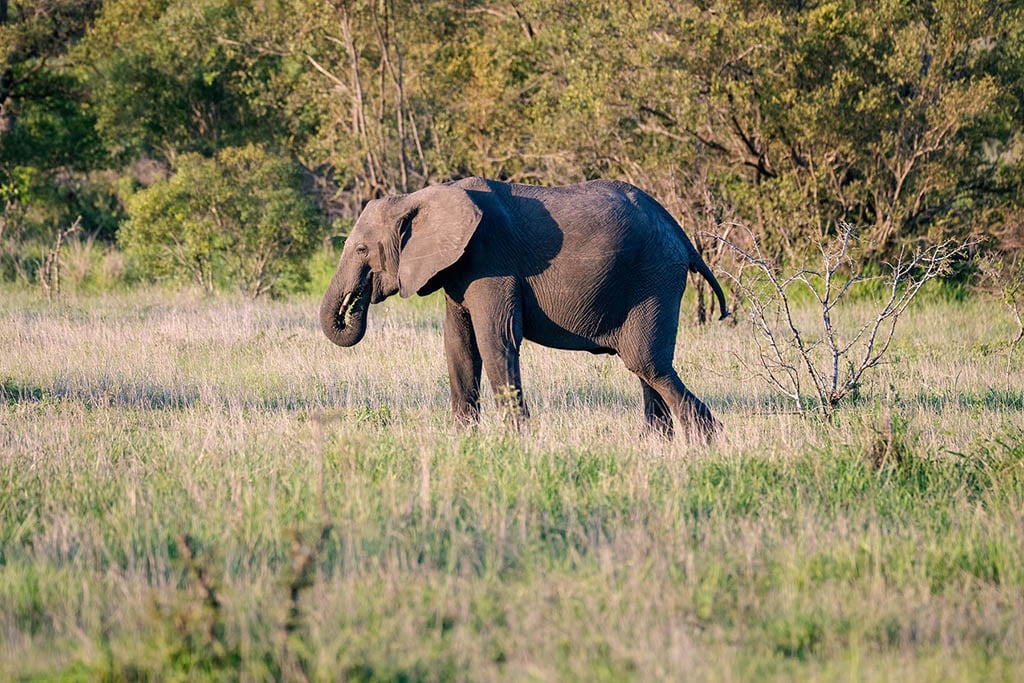
Additionally, unless you have experience with wildlife tracking and behaviour, it’s unlikely that you’ll see anywhere near as much wildlife on a self-drive safari compared to a guided one. This was certainly true of my experience.
Although it costs slightly more, my favourite type of safari is a private guided safari. Starting at $300 per person per day (including accommodation, meals, park fees, vehicle rental, an experienced driver guide and fuel), I find this option strikes the perfect balance between affordability and a relaxing experience. Wildlife sightings are plentiful under the guidance of an expert guide and everything is taken care of so you can focus on enjoying the wildlife.
At the highest end of the scale are lodge-provided safaris which typically start from $400 per person per day and go all the way up to thousands per person per day, depending on the level of luxury and location.
Which safari destinations are most budget-friendly?
Safari costs can vary significantly from one country to another.
The most affordable safari destinations for a guided safari are Tanzania and Kenya, where private guided safaris start from around $350 per person per day and involve staying in comfortable accommodation with en-suite bathrooms.
Not only are safaris here cost-effective, but they provide excellent value for money as the game viewing is superb. In Kenya you can enjoy the breathtaking Maasai Mara, home to high densities of big cats, and in Tanzania you can view the great wildebeest migration year-round, huge herds stretching out for as far as the eye can see.
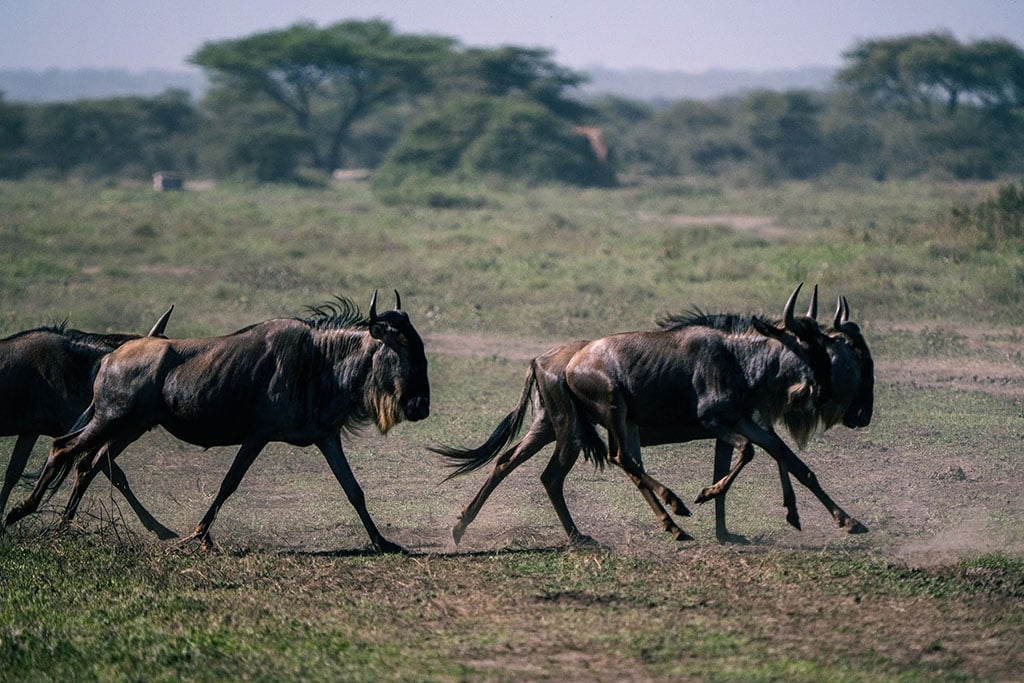
If you have time, you can easily combine Tanzania and Kenya for an extended safari trip you’ll never forget.
Uganda is mixed when it comes to pricing. If you intend to just go on safari and skip gorilla and chimpanzee trekking then it’s in fact the most affordable destination of all, its savannah parks each being priced below $50 per person per day.
However, the wildlife densities within these parks pale in comparison to Tanzania and Kenya, and so it may not be the best value for money. Most visitors to Uganda make the most of the primate trekking, but this inevitably increases the overall safari costs with chimpanzee trekking costing $300 per person and gorilla trekking $800 per person.
While a self-drive safari in South Africa is affordable, being doable for under $200 per day, South African guided safaris are typically more expensive than East African safaris. For example, guided safaris in South Africa typically start at $400 per person per day and aren’t private – you share the vehicle with other lodge guests.
At the highest end of the safari scale, private safaris in Botswana start from $500 per person per day and involve mobile camping rather than staying in permanent accommodation. If you’d rather enjoy a lodging safari in Botswana, you can expect to pay upwards of $1,000 per person per night. There’s a reason for the high price-tag however, and that’s to keep visitor numbers lower to provide a more exclusive experience.
Choose the right time to travel for lower costs
When you travel will also impact the cost of your safari.
Each location has a peak season, shoulder season and low season. These seasons follow the weather patterns for the countries, with peak season having the most favourable weather and low season being the wettest time of year.
Prices correlate to the popularity of the season, with prices in peak season being the highest. You can save up to 40% on lodges by visiting outside of peak season. Park fees also fluctuate depending on the season. The Maasai Mara in Kenya perhaps has the biggest price fluctuation being $100 per person per day plus tax between January and the end of June and then double for the second half of the year ($200 per person plus tax).
You may worry that a shoulder season or low season safari might be less enjoyable, but I actually prefer to go out of season. There are far fewer crowds at these times of year, making sightings feel more relaxing and wild. You’re also more likely to get a high-quality modern vehicle and more experienced guide as there’s less demand.
For example, in peak season in Kenya, I noticed there are a lot of minivan safari vehicles in the park. In contrast, when I visited in low season, there were very few minivans and most vehicles were Land Cruisers. My guide informed me that free upgrades to Land Cruisers are provided in low season as they have more available.
In East Africa peak season is between June and October, shoulder season is November to the end of February and low season is March to the end of May.
In Southern Africa peak season is the same, June to the end of October. Shoulder season is November to the end of December as well as March to the end of May. Low season is January and February, the wettest months.
My preference is to visit in shoulder season as I believe this strikes the right balance between having good weather and benefiting from lower prices.
Although the low season has the most affordable prices, your experience can get impacted by heavy rain. When I went on a Kenya safari in March, many roads within the national parks were closed due to wet weather, which impacted the game viewing experience.
How to book an affordable African safari
There are a number of ways to book your safari, and your chosen method of booking can have a large impact on your overall safari cost.
The three key ways to book your safari are: through an international tour operator, through a local tour operator or by booking all components yourself.
By far my favourite way to book a safari is through a local tour operator. I find this option strikes the perfect balance between being hassle-free and also not breaking the bank.
My first ever safari was actually booked through an international travel agent. But after speaking to people who were on the same safari as me, I learnt that I could have saved 50% by booking directly with the local tour operator as international operators often operate as a middle-man and charge a huge mark-up for the ease of booking through them, even though the safari experience will ultimately be the same as they outsource to local operators.
I’ve also tried ‘DIY’ self-drive safaris, where I book everything individually in order to minimise costs as much as possible. However, the stress of coordinating everything and the responsibility of having to fix things by myself when things went wrong quickly started to weigh me down and impact the enjoyment of my safari. My airport transfer didn’t turn up and on my self-drive safari I didn’t see many animals.
When I booked my first safari using a local tour operator, I was surprised that the costs weren’t actually that much more than my DIY safari and yet I was having a far more relaxing and rewarding experience. Local tour operators don’t add huge mark-ups to their safari costs and are often able to leverage their relationships with lodges to get better rates.
Tips to keep your African safari within budget
There are also a number of things you can do during your safari to keep your trip within budget.
Firstly, a great way to save money is to book accommodation outside of the national parks and reserves. This can help you make significant savings. For example, the cheapest accommodation in Maasai Mara costs over twice as much as the lowest-priced accommodation just outside the reserve. You’ll still have ample time for game drives, and if you’re planning to include rest days, these won’t be subject to park fees if you stay outside the park.
Another simple cost-saving measure is to drive rather than fly between different locations. Domestic flights cost around $300 per person per flight, which is significantly more expensive than driving. Although drive times can be long and some roads are bumpy, driving is a great way to take in the beautiful scenery en route and you can also stop wherever you wish to grab a bite to eat, buy souvenirs or simply admire the view.
The mode of transport you choose whilst on safari also varies in terms of cost. Kenya and Uganda allow minibuses within their parks and these are the cheapest form of safari vehicle. Land Cruisers cost around $100 per day more.
Lastly, group safaris are less expensive because fixed costs such as vehicle rental can be split among more people. If you can convince some friends to join you, you can all benefit from the savings a group experience affords.
Conclusion
An African safari during your career break is more affordable and accessible than you think! Flexibility on dates and booking through local operators are the two biggest money-saving levers at your disposal to help you plan an amazing safari break that’s well within budget.
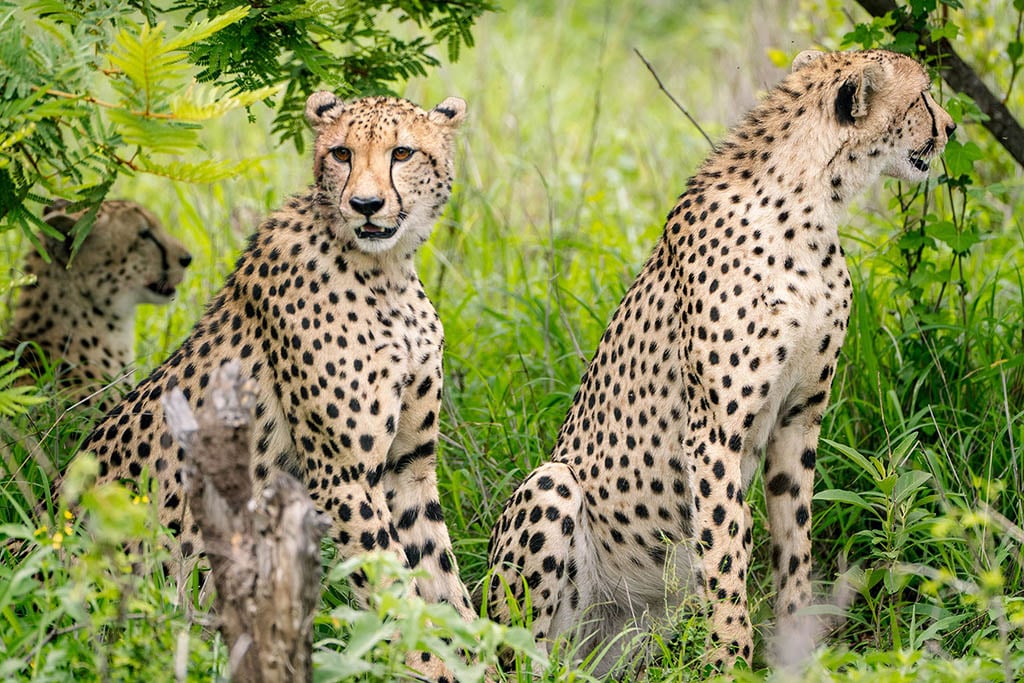
Every safari I’ve been on has left me with incredible memories, from watching the wildebeest crossing the Mara River in Tanzania to watching four adorable cheetahs playing in the Maasai Mara, Kenya.
I hope that sharing my knowledge and experience will help you enjoy an equally magical safari experience to make your career break truly unforgettable!
See our ultimate guide to taking a travel career break for more sabbatical inspiration and ideas.
Love this? Pin it for later!